Express UK Delivery
From £7.99

Pituitary pars intermedia dysfunction (PPID), often called equine Cushing’s disease, is a progressive condition seen mainly in older horses and ponies. Changes can be gradual, so recognising possible signs and speaking to your vet promptly can make a real difference to long-term management.
PPID affects the hormonal system. Age-related changes in the brain reduce the normal control of the pituitary gland, allowing part of the gland to become overactive and release increased amounts of ACTH and related hormones.
It cannot be diagnosed from appearance alone. Several signs can also result from dental problems, pain, ageing or other conditions. This article provides general information, but your vet must assess, test and treat an individual horse.
The best-known sign is a long or curly coat that does not shed normally, but this is often associated with more advanced disease. Earlier changes may be less obvious.
Signs to discuss with your vet include:
Laminitis needs urgent veterinary attention. Warning signs can include heat in the feet, a stronger digital pulse, reluctance to move, shortened steps, shifting weight or adopting a rocked-back stance.
Your vet will consider the horse’s age, history and clinical signs before deciding which tests are appropriate. A blood test measuring resting ACTH is commonly used. A thyrotropin-releasing hormone (TRH) stimulation test may help in some cases, particularly when signs are mild or the initial result is unclear.
ACTH concentrations change naturally through the year and can also be influenced by factors such as breed, stress and illness. Results therefore need veterinary interpretation using suitable seasonal and laboratory reference ranges. A result that does not match the clinical picture may lead to monitoring or repeat testing rather than an immediate conclusion.
Current guidance also recommends assessing insulin regulation because PPID and insulin dysregulation can occur together. This matters when evaluating laminitis risk and planning the diet.
PPID is a lifelong condition, but many affected horses can maintain a good quality of life with appropriate treatment and management. Pergolide is the main veterinary medicine used to treat PPID. It must be prescribed and monitored by a vet.
Your vet may monitor both clinical signs and hormone results after treatment begins and at suitable intervals thereafter. Do not change the dose or replace prescribed treatment with a feed or supplement without veterinary advice.
Everyday care remains important. Keep dentistry, farriery and parasite control up to date, monitor for infections and record changes in coat, appetite, drinking, energy and body condition.
There is no single PPID diet that suits every horse. Current Equine Endocrinology Group guidance says feed selection should be based on body condition and whether the horse also has insulin dysregulation.
A horse with both PPID and insulin dysregulation may need a ration lower in non-structural carbohydrate, together with carefully controlled pasture access. The forage is the largest part of most horses’ diets, so analysing it can be more informative than judging suitability by appearance alone. Your vet or equine nutritionist can advise whether soaking hay, changing forage or restricting grazing is appropriate.
Some horses with PPID lose weight and topline. These horses still need enough energy, good-quality protein, fibre, vitamins and minerals. Unnecessary restriction can make maintaining condition harder, so calorie intake should be adjusted without losing sight of insulin status and laminitis risk.
Use a weigh tape and body-condition scoring regularly, keeping the method consistent so changes are easier to spot. Dental problems are common in older horses and may reduce forage intake even when plenty is available. Seek advice if chewing becomes difficult, forage is being dropped or weight continues to fall.

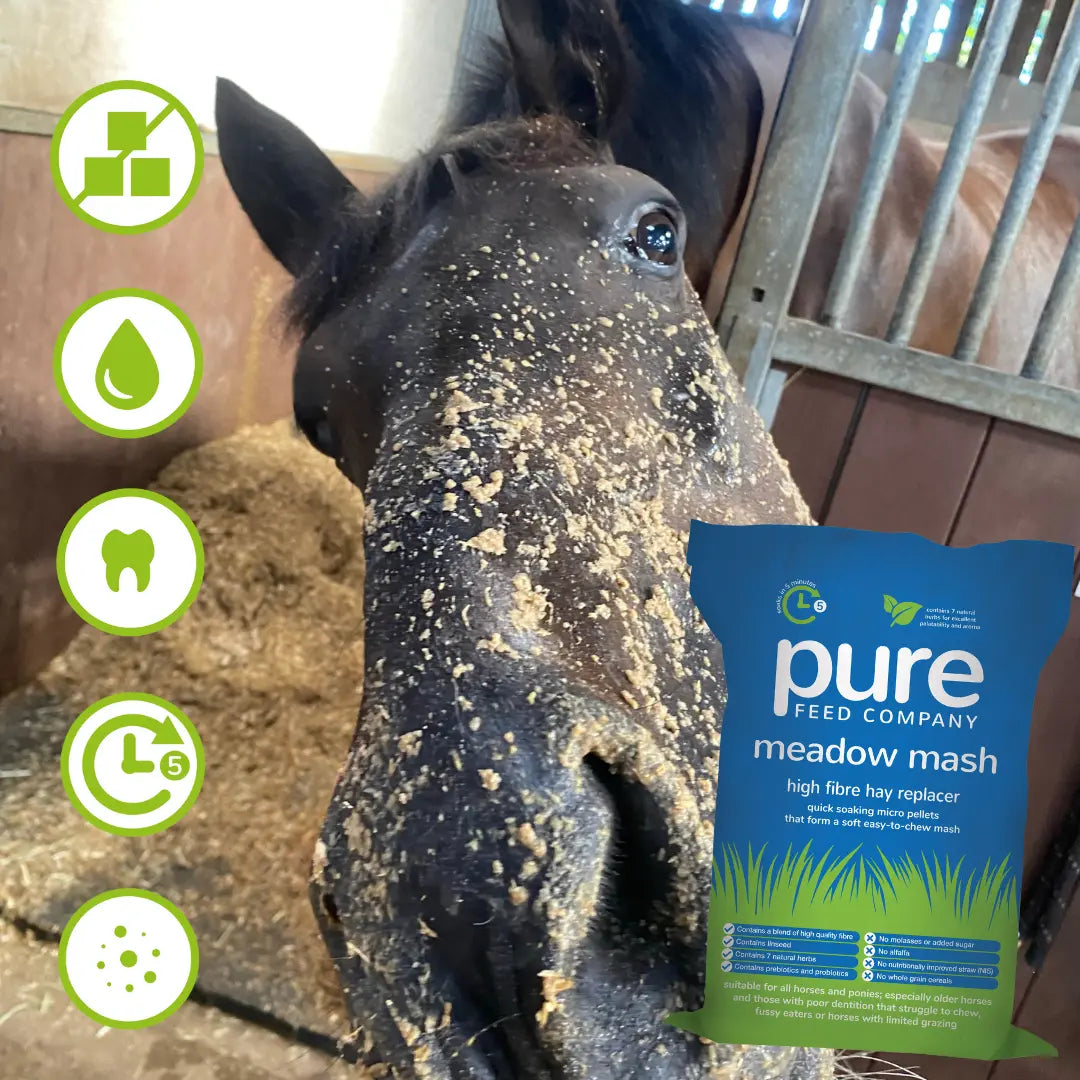
Pure Feed Meadow Mash is a soaked, high-fibre complementary feed that can be used as a partial hay replacer. Its current manufacturer analysis gives 4% naturally occurring sugar, 6% starch and 23% fibre. It can be particularly useful for older horses that struggle to chew long-stem forage or where adding soaked fibre and water to the ration is helpful.
Meadow Mash does not contain a complete added vitamin and mineral package, so the wider diet must supply the horse’s full requirements. Its nutritional figures may make it a useful option within some PPID feeding plans, but they do not make it automatically suitable for every affected horse. Consider insulin status, body condition, forage and everything else being fed.
With veterinary treatment, suitable nutrition and attentive day-to-day care, many horses with PPID continue to enjoy a good quality of life.